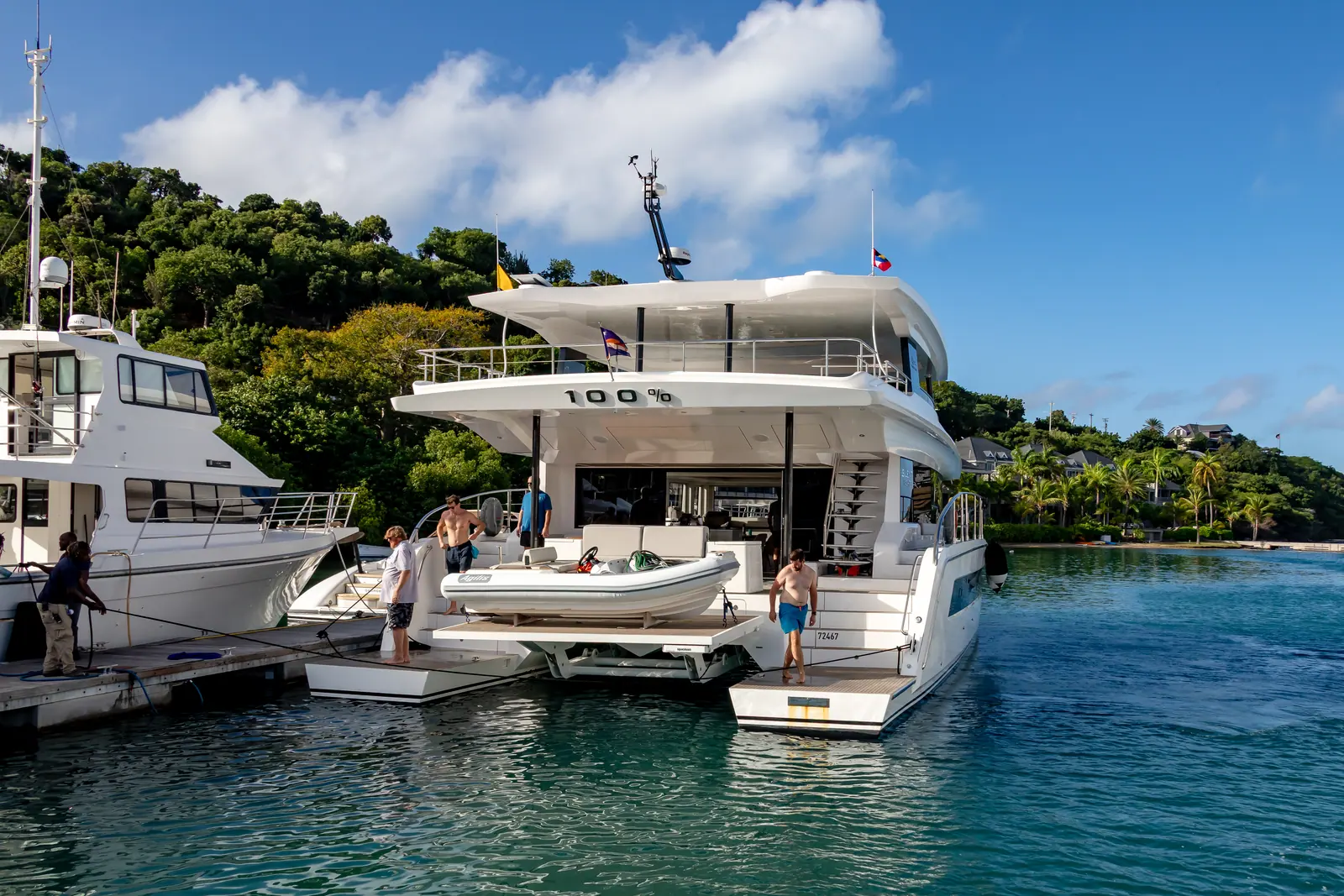
If you've ever dreamed of cruising the Caribbean on a luxury catamaran, the vision of halcyon days spent on glistening azure waters probably didn't include the rumble of an engine and the smell of diesel fumes.
In reality, most vessels are still dependent on fossil fuels for motoring, while running the air-conditioning at night means sleeping to the soundtrack of a loud generator.
That's where Silent Yachts come in.
The international firm, which has offices on both sides of the Atlantic in Italy and Florida, pioneered solar-powered, emissions-free cruising.
And, as the name suggests, the only sound you're likely to hear on board is the lapping of the waves.
Its clean technology and sublime on-water experience have earned Silent Yachts a string of awards since 2024, including multihull of the year, best electric catamaran, and most efficient yacht.
A Silent 62 crosses the Atlantic to Antigua
In late 2025, the company made one of its most ambitious voyages to date when a crew aboard a Silent 62 model crossed the Atlantic, arriving in Antigua shortly before Christmas.
Leading the navigation was Silent Yachts' chairman Steve Bell, marking his third Atlantic crossing and his first aboard a Silent vessel. For the boat's owner Jay Dollries and friend Randy Lane, it was the culmination of a lifelong dream. The three were joined by Jay's usual captain Will Mitchell and engineer Michael Scherdel.
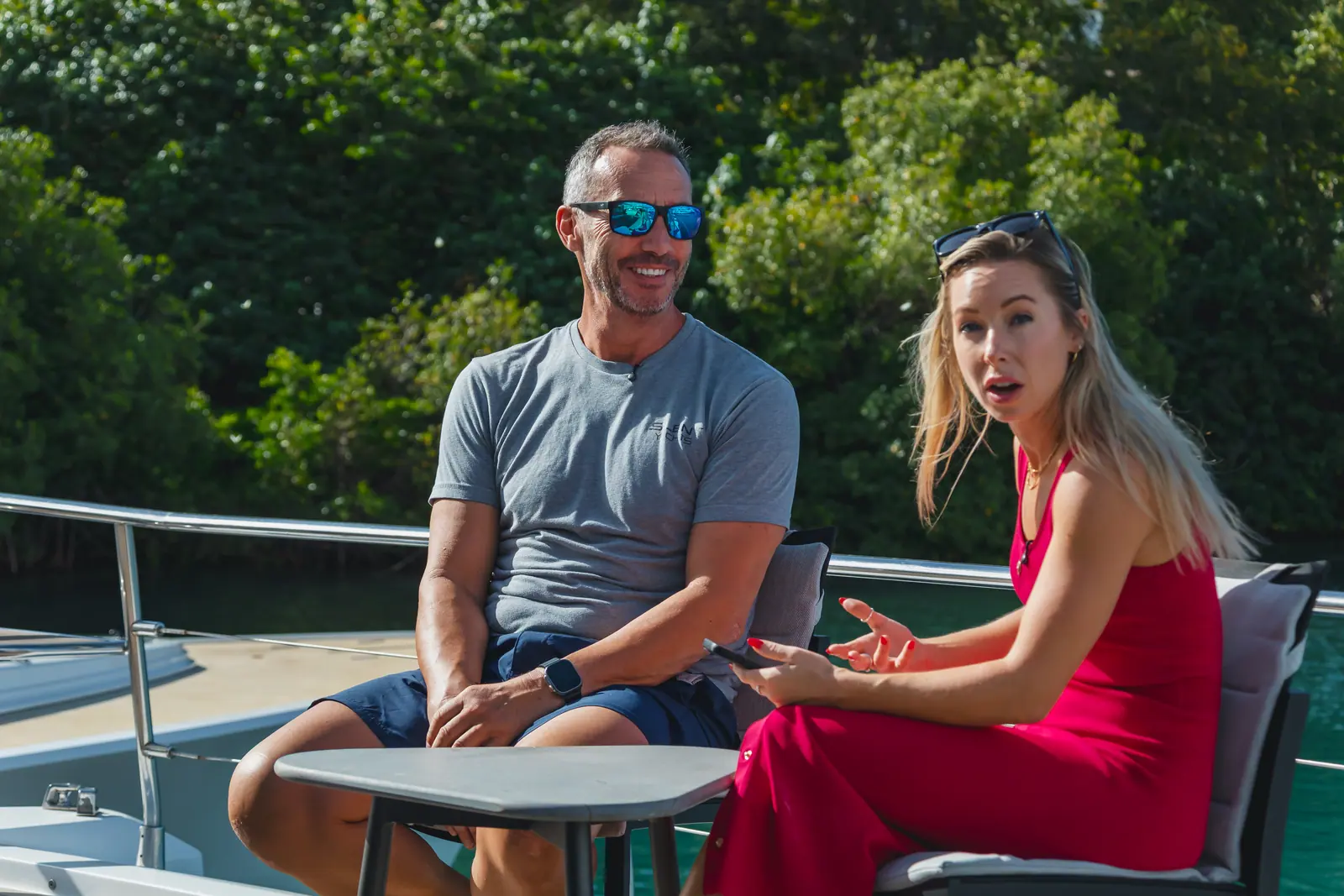
Steve spoke exclusively to Luxury Locations' Carly Davies about the five-week voyage, documented on his company's Instagram page.
“We wanted to show our followers what it's really like to cross the Atlantic on a solar-electric boat, rather than just glossy photos and everything looking perfect,” he explained.
“The crossing wasn't smooth thanks to the waves. The waves were not oceanic; they were driven by wind and other factors like depressions and high pressures, so it was a little uncomfortable, but in terms of the yacht it performed really well and we had prepared for it.”
How a solar-electric yacht works
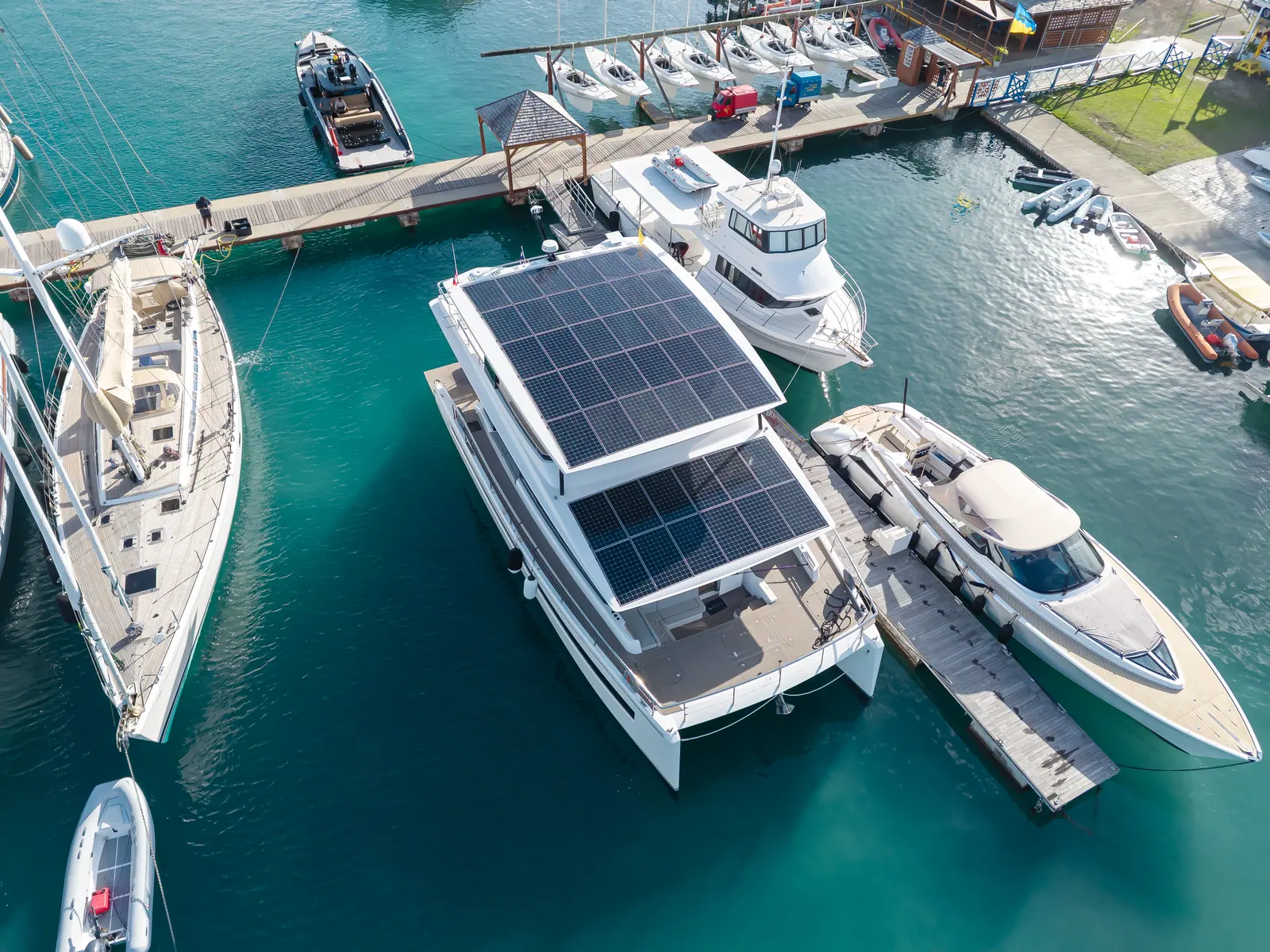
The catamaran's roof is covered completely with solar panels, which charge a large battery bank in the centre of the boat that powers the boat's motors.
“It means of course we are dependent on the sun,” Steve continued. “When traversing 3,800 miles non-stop it's not feasible to rely purely on solar. So we also have a diesel generator on board, because the solar panels cannot provide enough power to run 24/7.
“But in terms of what most people want to do, such as cruise for four or five hours a day around the British Virgin Islands, or travel from Falmouth Harbour to English Harbour, where you put the anchor down, switch the air-conditioning on, have a few drinks and come back, it's entirely sustainable.”
“In terms of what most people want to do… where you put the anchor down, switch the air-conditioning on, have a few drinks and come back, it's entirely sustainable.”
Steve Bell, Silent Yachts
Gibraltar to Antigua in five weeks
The crew's epic journey began in Gibraltar, before heading to Lanzarote, followed by a brief stop in Morocco due to poor weather, then on to Cape Verde.
The boat's excellent engineering lived up to its reputation.
“In five weeks all we had to fix was one relay on the drive system. It took us 10 minutes to change it and we've got spares anyway. On a couple of occasions there was a little wobble, but it's like a computer: you turn it off and turn it on again,” Steve said.
“We left Cape Verde full of fuel and monitored the supply constantly to make sure we had enough surplus to get across.
“The biggest drain on the motors is the air-conditioning, so we had to manage the power. It's just like having an off-grid house: you turn everything off when you're not using it.”
Even when the generator was running, the catamaran was still largely silent, thanks to the generator being housed in a soundproof enclosure.
With four double cabins and two crew cabins, the 62ft by 29ft boat sleeps eight guests and two to three staff.
“It was good fun on board; we had a great team. Thanks to Starlink internet, we were able to watch the Abu Dhabi Grand Prix and the Champions League,” Steve smiled.
4,000 litres instead of 11,000
The crew opted for a leisurely crossing in order to keep the carbon footprint to a minimum.
“The boat can go as fast as a traditional yacht but we chose not to, because the faster we go the more energy we use.
“With a diesel engine, a boat this size would use 10,000 to 11,000 litres of fuel. We used about 4,000,” Steve said.
And as the technology continues to improve, so too will Silent Yachts' green credentials.
“It will get better in terms of solar panel performance and battery performance, and we are also making the software and operating system more and more efficient,” Steve added.
“It's important to us and our customers to be both silent and sustainable.”