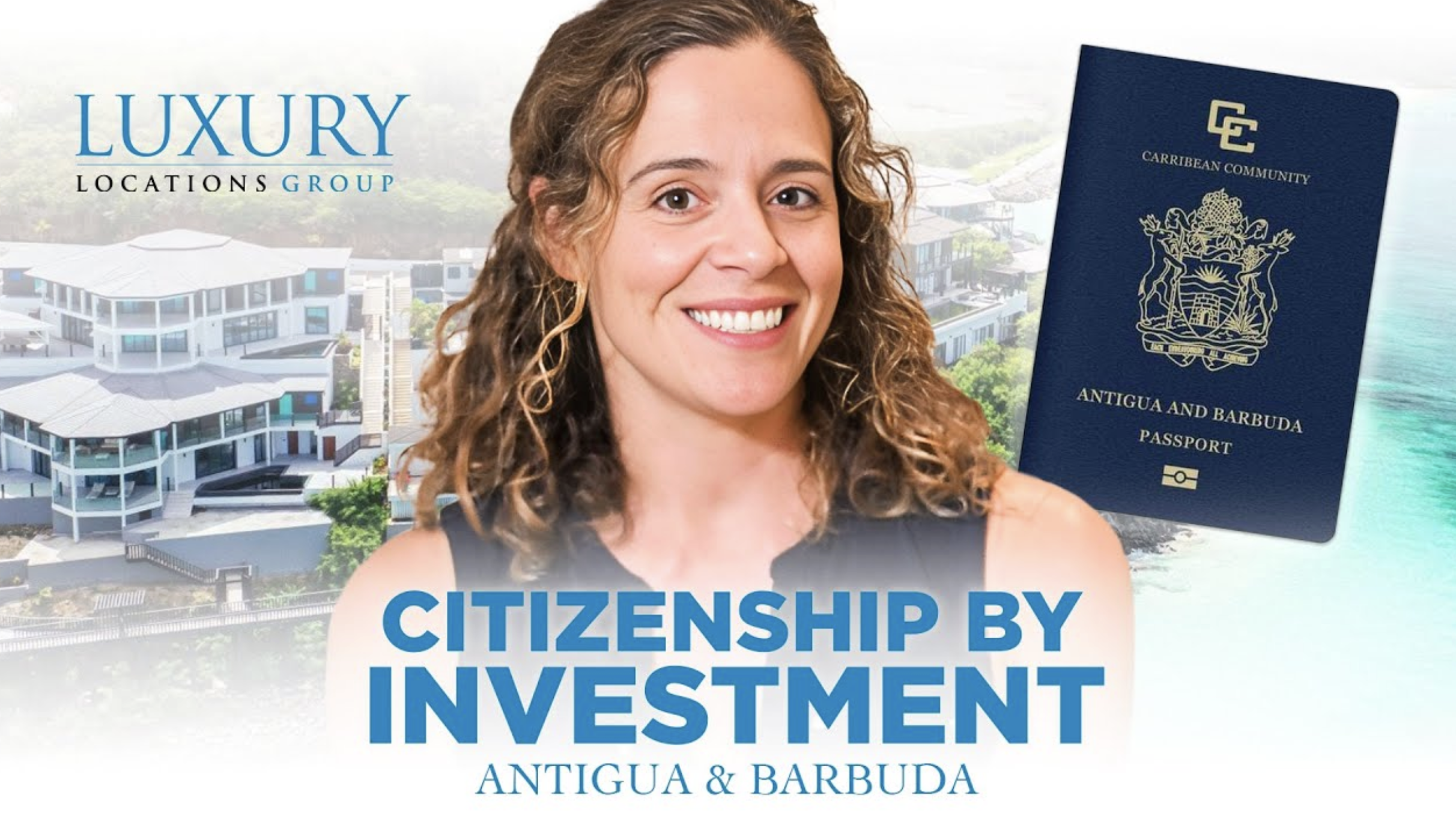
Why America’s Wealthy Are Quietly Choosing Antigua
In the first quarter of 2026, nearly one in three people applying for a second citizenship through the world’s largest advisory firm was American. Not Russian. Not Chinese. American.
And a growing number of them are choosing to build their second life right here, in Antigua.
I’m Nadia Dyson and I work with families relocating to Antigua — founders, fund principals and family offices. Over the last 18 months, something has shifted. They’re not buying villas because they want a holiday home. They’re building a Plan B.
Before we go further, let me say this clearly, because the headlines get it wrong: we don’t sell passports. We offer an opportunity for citizenship. That isn’t semantics. It’s the difference between a transaction and a relationship — and it’s why Antigua attracts the calibre of family it does.
Americans Are Now the World’s Biggest Buyers of Second Citizenship
This is no longer a fringe idea. It’s a sophisticated, well-advised migration of capital and optionality. The numbers tell the story:
- Applications for investor citizenship from Americans surged more than 400% in 2020, then jumped a further 75%+ in 2025, according to Henley & Partners.
- Americans are now the single largest applicant nationality in the world for second citizenship.
- In Q1 2026, US nationals made up nearly a third of every application Henley & Partners processed globally.
- For Antigua & Barbuda specifically, Americans accounted for around 50% of 2026 applications so far — up from roughly 26% the year before.
Why Now? The Forces Driving the Decision
The triggers are well understood by anyone advising serious wealth:
- Political volatility — regardless of which side you sit on, half the country feels unrepresented every four years.
- Tax exposure — the US is one of only two countries that taxes citizens on worldwide income, no matter where they live.
- Estate and succession planning — wealthy families want their children to inherit options, not just assets.
- Travel friction — even US passport holders face more visa requirements and tighter scrutiny.
The framing has changed. A second citizenship used to feel exotic. Today it’s discussed like portfolio diversification or umbrella insurance. As one advisor put it: if you wouldn’t hold 100% of your wealth in one stock, why hold 100% of your life in one jurisdiction?
Why Antigua and Barbuda Stands Out
Five Caribbean nations offer citizenship by investment. Antigua and Barbuda is one of them — and for American families, it has a distinct edge.
What Antigua Citizenship by Investment Actually Involves
- Minimum contribution: from $230,000 to the National Development Fund, covering a family of up to four. It’s a contribution to the country — schools, infrastructure, healthcare — not a fee for a document.
- Real estate route: invest from $300,000 in a government-approved development and you become both a citizen and the owner of a hard asset on one of the region’s most desirable islands. You must hold the property for a full 5 years prior to re-selling.
- Processing time: typically around six to twelve months.
- Residency requirement: just 30 days — within the first five years.
- Tax profile: no personal income tax, no capital gains tax, no inheritance tax, no wealth tax.
- Global mobility: visa-free or visa-on-arrival access to over 150 countries, including the Schengen Area and the UK.
Built for Serious Wealth — Not Just Paperwork
The part most articles undersell is that Antigua is functionally set up for significant wealth:
- Direct flights to London, Toronto, Atlanta, New York and Miami.
- Private banking infrastructure.
- Superyacht facilities at Falmouth and Jolly Harbour.
- Branded residences and a stable, English-speaking, common-law jurisdiction.
It’s designed to receive UHNW families — not simply process their paperwork.
What “Approved Real Estate” Actually Looks Like
“Approved real estate” is an abstract phrase until you see what’s behind it. These are projects I’d put in front of a client today:
- The Oasis Collection — a lifestyle-led development with full CIP approval, designed for buyers who want a turnkey Caribbean base without the operational headache.
- Nikki Beach Residences — a globally recognised, beachfront brand — the kind of asset that holds value because the name does the marketing for you.
- The Gardens — a more private, residential proposition for families who want community and discretion rather than resort energy.
- Sugar Ridge — established, beautifully positioned condos with a track record, appealing to buyers who want proven rental performance alongside citizenship.
There are others too — branded residences, boutique developments, and a small number of off-market opportunities I don’t put on a public page. The point isn’t the list. The right project for you depends on who you are, how you’ll use the island, and what you want your family to inherit. That’s a conversation, not a catalogue.
The Distinction That Matters: Citizenship, Not a Passport
I want to come back to something, because it’s the most important part of this whole piece. We offer an opportunity for citizenship.
A passport is a document. A citizenship is a relationship — between you, your family, and a country. Antigua’s Citizenship by Investment Unit doesn’t process documents; it vets people. There’s KYC, AML, background checks, a virtual interview and a real possibility of rejection. That’s precisely why Antigua’s programme is internationally credible.
So if you’re looking for a frictionless way to buy something, this isn’t it. If you’re looking for a jurisdiction that will welcome your family, protect what you’ve built, and give your children a future with options — that’s the conversation we’re actually having.
Who’s Actually Doing This?
The profile has changed. Five years ago it was retirees and crypto founders. Today it’s:
- Tech executives hedging against political and tax shifts.
- Founders structuring ahead of a liquidity event.
- Family offices building generational optionality.
- Remote-working professionals who realised they can live anywhere — and want the lifestyle to match.
What they share is a desire for quiet. Not headlines — a credible, low-friction, English-speaking jurisdiction where their family can land, settle and live well, without renouncing anything they already have.
What the Articles Don’t Tell You
A few honest notes, because most content on this topic is written by people who don’t live next to the families buying in:
- Not every approved development is equal. Choose the wrong project and you own a unit in a lesser desriable area which means resale can be much longer.
- Due diligence is real. The CIU rejects applicants. No agent can rescue a problematic file.
- Citizenship is the start of the relationship, not the end. The families who get the most out of this are the ones who actually use the island.
- The best inventory is tightly held. Genuinely good properties — beachfront, branded, full title — are increasingly scarce. The window on certain inventory is closing.
Is Antigua Right for Your Family?
If this resonates — if you’re one of the people quietly looking at this for the first time — Antigua deserves a closer look than the noise online gives it. And remember: We offer an opportunity for citizenship, in a country that will know your name, welcome your family, and protect what you’ve built.
If you’d like a conversation that isn’t a sales pitch — just an honest read on whether this fits your situation, and which projects might actually suit you — get in touch with the Lux Locations team for a private consultation.
Frequently Asked Questions
How much does Antigua citizenship by investment cost?
The most accessible route is a contribution from $230,000 to the National Development Fund, covering a family of up to four. The approved real estate route starts from $300,000. Government, due diligence and passport fees apply separately.
How long does it take to get Antigua citizenship?
Processing typically takes around six to twelve months, depending on the route and how quickly documentation is prepared. Real estate applications can take a little longer because of the property transaction itself.
Do I have to live in Antigua to keep citizenship?
No. The residency requirement is just thirty days within the first five years — one of the most relaxed in the world.
Will I be taxed on my worldwide income?
Antigua and Barbuda levies no personal income tax, no capital gains tax, no inheritance tax and no wealth tax on its citizens. Note that US citizens remain subject to US tax obligations regardless of a second citizenship; speak to a cross-border tax adviser about your specific situation.
Can I keep my current citizenship?
Antigua and Barbuda permits dual citizenship, so you can hold an Antiguan passport without renouncing your existing nationality. Always confirm how a second citizenship interacts with your home country’s rules.
Which Antigua developments qualify for citizenship?
Only government-approved projects qualify. Current examples include The Oasis Collection, Nikki Beach Residences, The Gardens and Sugar Ridge, alongside other branded and boutique developments. We can match you to projects that suit how you intend to use the island.